Acne: causes, symptoms and treatment
Contents
What is acne?
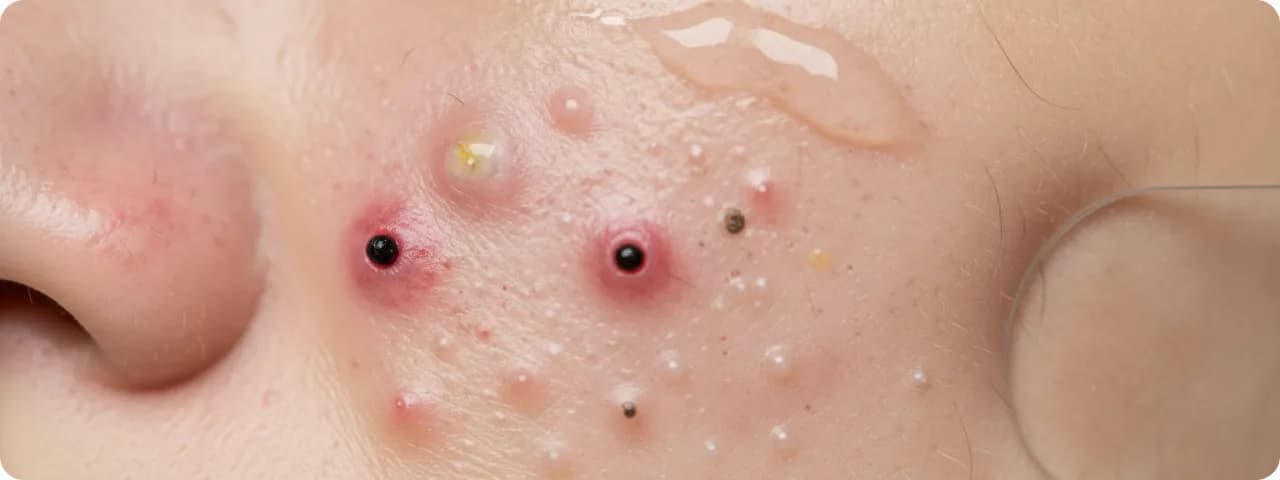
Acne (acne vulgaris) is a chronic inflammatory skin disease caused by excessive sebaceous gland activity and blockage of the hair follicles. It presents as comedones, papules and pustules, and in severe cases as nodules and cysts. Acne most often affects the face, back and chest, with a considerable effect on quality of life and on the patient's emotional wellbeing.
Causes
Acne develops through a combination of several key factors that affect the skin and the work of the sebaceous glands:
- hormonal changes: rising androgen levels in adolescence, during pregnancy or in polycystic ovary syndrome.
- excessive production of sebum, which creates a favourable environment for Cutibacterium acnes bacteria to multiply.
- genetic predisposition: if the parents had acne, the likelihood of the disease in their children rises considerably.
- external factors: stress, poor diet, the use of comedogenic cosmetics and frequent mechanical irritation of the skin.
Symptoms and signs
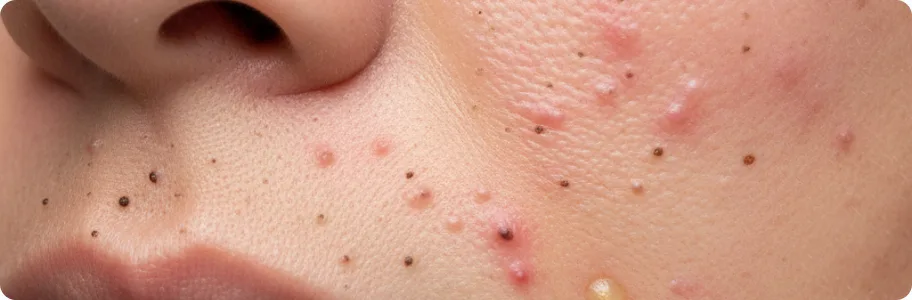
Acne appears as a variety of lesions: open and closed comedones (blackheads and whiteheads), inflammatory papules (red bumps), pustules, and in severe forms deep painful nodules and cysts that can leave scars and pigmented marks behind them.
Diagnosing acne
Acne is diagnosed by a dermatologist, mainly on clinical examination. The doctor assesses the type and number of lesions and determines the severity of the disease according to the international classification. Where necessary, laboratory tests are ordered — a hormonal profile, a bacterial culture, and in women an assessment for hyperandrogenism to rule out endocrine disorders.
Treatment
Treatment depends on severity. Mild forms are treated with topical retinoids, benzoyl peroxide and azelaic acid. Moderate forms require topical therapy combined with oral antibiotics. Severe acne is treated with isotretinoin (a systemic retinoid) under careful medical supervision. Procedures are used in addition: chemical peels, laser therapy and photodynamic therapy.
Prevention
To prevent acne it is recommended to cleanse the skin gently twice a day, to use non-comedogenic cosmetics, to avoid squeezing lesions, to balance the diet with reduced sugar and dairy, and to keep stress under control and get enough sleep.
Related reading
Did not find the answer to your question?
Every case is individual. If you have noticed changes in your skin, or have symptoms that concern you, book a consultation.