Atopic dermatitis: living with chronic itch

What is atopic dermatitis?
Atopic dermatitis (AD) is a chronic relapsing inflammatory skin disease accompanied by intense itching and dryness. It usually begins in early childhood, but it can appear for the first time at any age. AD is part of the so-called "atopic triad" together with bronchial asthma and allergic rhinitis. According to WHO data, the disease affects up to 20% of children and 3–5% of adults worldwide, with a substantial effect on the quality of life of patients and their families.
Causes and mechanisms
Atopic dermatitis is multifactorial: a genetic predisposition interacts with environmental factors.
- impaired skin barrier: mutations in the filaggrin gene (FLG) lead to a defective epidermal barrier, which makes it easier for allergens and microorganisms to penetrate the skin.
- immune dysregulation: a dominant Th2 immune response causes excessive production of the interleukins IL-4, IL-13 and IL-31, which sustain inflammation and itching.
- the skin microbiome: colonisation with Staphylococcus aureus is found in more than 90% of patients with AD, intensifying the inflammatory process and provoking flares.
- external triggers: dry air, synthetic clothing, stress, food allergens, dust mites, tobacco smoke and abrupt changes in temperature can all cause a flare.
Clinical picture and forms
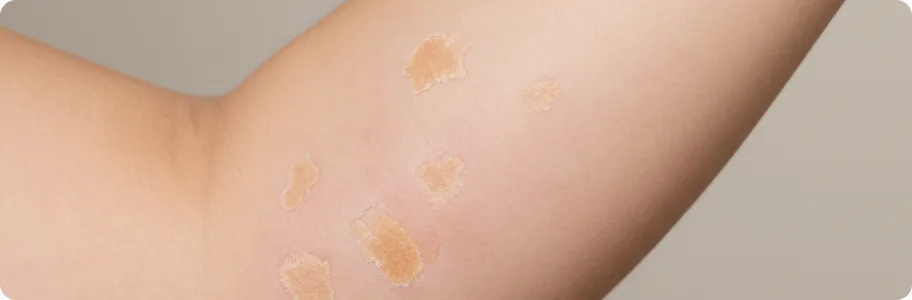
How AD presents depends on the patient's age. In infants it affects the cheeks, the scalp and the extensor surfaces of the limbs. In older children and adults, lichenified plaques in the elbow and knee flexures, on the neck and on the wrists are typical. The main symptoms are intense itching that worsens at night, dry skin (xerosis), erythema, papules, vesicles in the acute phase, and thickened skin with accentuated skin markings (lichenification) in chronic disease.
Diagnosis
Atopic dermatitis is diagnosed on the Hanifin–Rajka clinical criteria, which comprise four mandatory features (itching, typical morphology and distribution, a chronic relapsing course, a history of atopy) and more than 20 additional ones. Laboratory work includes total and specific IgE levels and skin prick tests to identify allergens. Dermatoscopy and skin biopsy are used rarely — mainly to exclude other dermatoses: psoriasis, contact dermatitis, fungal infections or cutaneous T-cell lymphoma.
Current approaches to treatment
The basis of treatment is the regular use of emollients — at least 200 g per week for an adult. Topical corticosteroids remain the first line of anti-inflammatory therapy during flares. Calcineurin inhibitors (tacrolimus, pimecrolimus) are used for maintenance therapy and on sensitive areas. Biologic drugs have been a breakthrough: dupilumab (anti-IL-4/IL-13) and tralokinumab substantially reduce itching and improve the condition of the skin. JAK inhibitors (baricitinib, upadacitinib) are a new class of systemic therapy with a rapid onset of action.
Daily care and preventing flares
The key to controlling AD is consistent daily care: take a short warm (not hot) shower, apply an emollient within 3 minutes of bathing, wear clothes made of natural fabrics, keep indoor humidity at 40–60%, avoid known triggers, use hypoallergenic laundry products, and keep a flare diary to identify your own provoking factors.
Related reading

Did not find the answer to your question?
Every case is individual. If you have noticed changes in your skin, or have symptoms that concern you, book a consultation.