Sun protection for sensitive skin: a complete guide

Why sensitive skin needs particular protection
Sensitive skin is characterised by an impaired barrier function: the lipid layer of the epidermis is thinner than in normal skin, and transepidermal water loss (TEWL) is increased. That leaves it vulnerable not only to solar radiation but also to the chemical ingredients of sunscreens themselves. UVA rays penetrate into the dermis and break down collagen and elastin, while UVB causes erythema and burns. In people with rosacea, atopic dermatitis or contact allergy, ultraviolet light additionally activates pro-inflammatory mediators and worsens the underlying disease. The paradox is that sun protection is essential, yet most formulations contain potential irritants.
Types of UV filter: chemical versus mineral
Sunscreen filters fall into two large groups — chemical (organic) and mineral (physical). For sensitive skin this choice is the crucial one:
- mineral filters (zinc oxide, titanium dioxide): work as a physical barrier, reflecting and scattering UV rays. They do not penetrate the skin, do not undergo chemical reactions and have anti-inflammatory properties. Ideal for reactive skin, for children and in pregnancy. The drawback: they can leave a white cast, particularly on darker skin tones. Modern micronised formulations reduce this effect.
- chemical filters (avobenzone, octinoxate, oxybenzone, homosalate): absorb UV rays and convert them into heat. A lighter texture and no white cast, but potentially irritating to sensitive skin. Oxybenzone is the most frequent culprit in contact dermatitis among SPF ingredients. Newer filters (Tinosorb S, Tinosorb M, Mexoryl XL) have a better safety profile for sensitive skin.
- combined formulations: pair a mineral with a chemical filter for optimal protection and cosmetic feel. With sensitive skin, make sure the chemical component contains no oxybenzone or octinoxate. Look for formulations with a minimal ingredient list (a short INCI list), without fragrance, alcohol or essential oils.
- irritant ingredients to avoid: alcohol (alcohol denat.) — dries the skin and disrupts the barrier; synthetic fragrance (parfum/fragrance) — the leading allergen in cosmetics; essential oils (lavender, citrus, eucalyptus) — photosensitisers; preservatives (methylisothiazolinone) — powerful contact allergens. Check the ingredients even in products labelled "for sensitive skin".
How to choose an SPF for sensitive skin
The ideal sunscreen for sensitive skin meets several criteria. SPF 30–50 with broad-spectrum protection (UVA+UVB) is the optimal level; above SPF 50 the difference is minimal while the concentration of filters rises. A mineral base (zinc oxide ≥15% or titanium dioxide) is the first choice. No fragrance, dyes or alcohol. A hypoallergenic, dermatologically tested formulation. Moisturising components (niacinamide, ceramides, hyaluronic acid) offset the drying effect. Before using a new product regularly, do a patch test: apply a small amount to the inner forearm for 24–48 hours and watch for a reaction.
Rules for daily sun protection
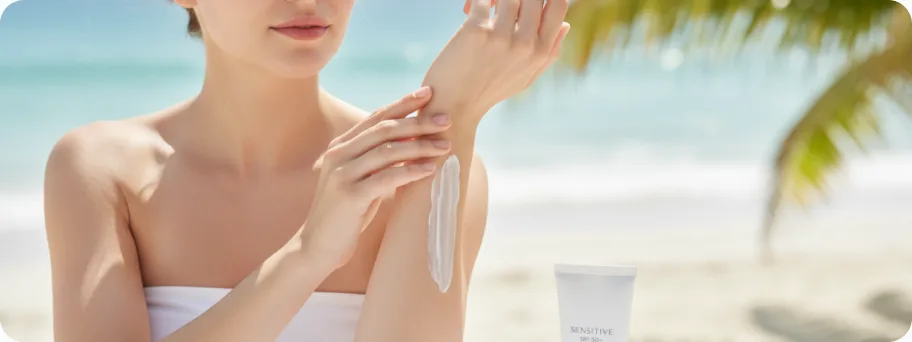
Even the best SPF does not work if it is not applied properly. Step 1: apply 15–20 minutes before going out in the sun (for chemical filters) or immediately before (for mineral ones). Step 2: use enough — 2 mg/cm², or roughly ½ a teaspoon for the face. Most people apply only 25–50% of the required amount, which reduces the real SPF by a factor of 2–4. Step 3: reapply every 2 hours while out in the sun, and after sweating or contact with water. Step 4: do not forget the ears, neck, décolletage and the backs of the hands — these areas are often missed. On days spent mainly indoors, one application in the morning is enough.
Additional forms of protection
Sunscreen is only one element of photoprotection. Physical protection: a hat with a brim ≥7 cm, sun-protective clothing rated UPF 50+, and good sunglasses with a UV400 filter. Avoid direct sun between 10:00 and 16:00, when UVB intensity is at its highest. Car and office windows let UVA through: if you sit by a window, protection is needed indoors as well. Antioxidants (vitamin C, vitamin E, ferulic acid) in serums increase photoprotection by 20–30% when applied under a sunscreen. After sun exposure, repair the barrier: products with panthenol, aloe vera, Centella asiatica and ceramides soothe irritated skin.
When to see a dermatologist
See a dermatologist if any sunscreen causes burning, itching or a rash; if you have a photodermatosis or solar urticaria; if new pigmented lesions appear on the skin or existing moles change; or if you are taking photosensitising medication (tetracyclines, retinoids, NSAIDs) and are unsure how to adapt your protection. A doctor can select a specialised medical sunscreen, prescribe desensitising treatment or recommend phototherapy to build the skin's tolerance to ultraviolet light.
Related reading


Did not find the answer to your question?
Every case is individual. If you have noticed changes in your skin, or have symptoms that concern you, book a consultation.