The diabetic foot and fungus: why onychomycosis must be treated in diabetes
Contents
What is onychomycosis and why are people with diabetes at risk?
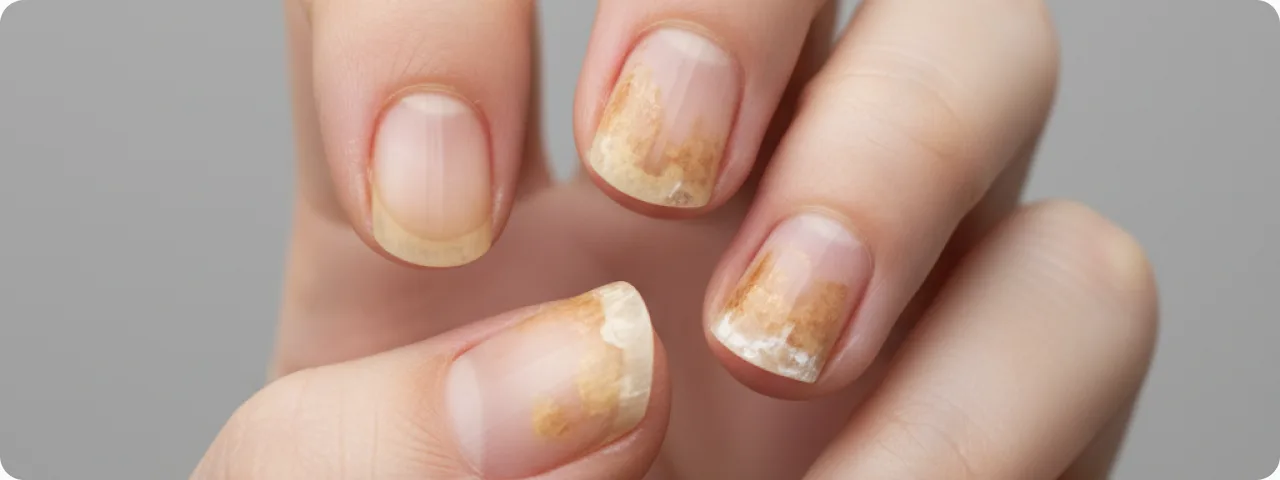
Onychomycosis is a fungal infection of the nail plate that occurs in 26–35% of patients with diabetes, three times the rate in the general population. In diabetes, microcirculation in the lower limbs is impaired, local immunity is reduced and the chemical composition of sweat changes, creating an ideal environment for dermatophytes — fungi of the species Trichophyton rubrum and Trichophyton mentagrophytes — to multiply. Diabetic neuropathy reduces sensation in the feet, so a patient may not notice the early signs of infection: thickening, a change of colour or deformity of the nail. Raised glucose in the blood and tissues acts as a nutrient substrate for fungi, accelerating their growth. Angiopathy — damage to the small vessels — slows the delivery of immune cells and of drugs to the site of infection, which makes treatment longer and more difficult. Understanding this link is the key to timely diagnosis and to preventing serious complications of the diabetic foot.
Why onychomycosis is dangerous in diabetes
Untreated nail fungus in patients with diabetes is a serious threat, because it can set off a cascade of complications:
- Diabetic foot syndrome: fungal infection breaches the integrity of the nail plate and the surrounding tissue, creating an entry point for bacteria. In people with diabetes, even a microcrack can turn into an ulcer that heals badly. Statistics show that up to 33% of diabetic foot infections begin with untreated onychomycosis. A nail deformed by fungus can cut into the soft tissue, causing onychocryptosis (an ingrown nail) with subsequent infection and a risk of gangrene.
- Bacterial superinfection: a nail plate damaged by fungus loses its barrier function, which opens the way for streptococci and staphylococci. In people with diabetes, bacterial infections progress faster because of impaired microcirculation and a reduced immune response. Erysipelas, cellulitis and osteomyelitis — these grave complications can develop from what appears to be a trivial nail fungus. The risk of amputation of a lower limb in people with diabetes and a fungal foot infection is 5–6 times higher.
- Worse glycaemic control: a chronic fungal infection is a constant source of inflammation, which raises pro-inflammatory cytokines and increases insulin resistance. That creates a vicious circle: high blood sugar favours the fungus, and the fungus worsens control of the sugar. Pain and discomfort from an affected nail limit physical activity, which further worsens glycaemic control and the patient's overall metabolic state.
- Spread of infection and systemic risks: untreated, the fungus spreads from one nail to its neighbours and in time to the skin of the foot (tinea pedis), to the spaces between the toes and even to the hands. In immunocompromised patients with diabetes there is a risk of invasive mycosis — the fungal infection penetrating into deeper tissue. Fungal spores remain in footwear and on surfaces at home, infecting other members of the family and causing relapse after treatment.
Diagnosing onychomycosis in diabetes
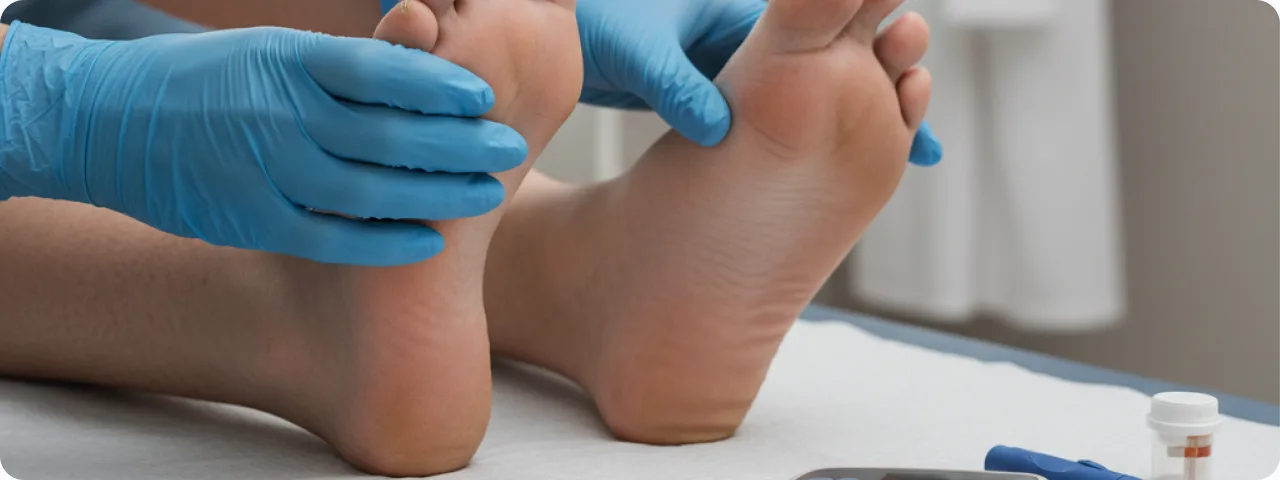
Diagnosing a fungal nail infection in diabetes calls for particular care, because changes in the nail plate can be caused by the fungus or by the diabetes itself (diabetic onychodystrophy). Microscopy of a scraping with KOH is the basic method and reveals fungal hyphae within 15–20 minutes. Culture on a nutrient medium identifies the particular organism and its sensitivity to antifungals, but the result takes 2–4 weeks. PCR is the most accurate modern method, identifying fungal DNA even where involvement is minimal, with a sensitivity of 95–97%. Dermatoscopy of the nail plate reveals characteristic features: yellow-white proximal spikes, a ruin-like edge and longitudinal grooves. It is also important to assess peripheral circulation (foot pulses, the ankle-brachial index) and neurological status (monofilament testing), because these factors determine the treatment strategy and the outlook.

Treating onychomycosis in patients with diabetes
Treating nail fungus in diabetes requires an individual approach that takes account of the stage of involvement, the state of the vessels, liver and kidney function and interactions with glucose-lowering drugs. Topical therapy (amorolfine 5%, ciclopirox 8% as a medicated lacquer) is effective where less than 50% of the nail plate is affected and the matrix is not involved — applied 1–2 times a week for 6–12 months. Systemic therapy: terbinafine (250 mg/day for 3 months for toenails) has the highest effectiveness at 70–80%, but requires liver enzymes to be checked every 6 weeks. Itraconazole as pulse therapy (400 mg/day for one week a month, 3–4 cycles) is an alternative, but has more drug interactions with diabetes medication. Medical pedicure with instruments is an essential part of treatment: removing the affected parts of the nail allows antifungals to penetrate more deeply. Laser therapy (Nd:YAG 1064 nm) is an adjunct with no systemic side effects, destroying fungal hyphae by heat. Combined therapy (a systemic plus a topical antifungal plus instrumental treatment) shows the highest effectiveness — up to 90% mycological cure.
Preventing fungal infection in diabetes
Preventing onychomycosis is an integral part of comprehensive diabetic foot care. Examining the feet and nails daily is an essential routine: use a mirror to inspect the soles and between the toes, and look for changes in the colour, thickness or shape of the nails. Keep the feet dry, particularly between the toes — after washing, dry every fold thoroughly and use an antifungal talc or powder. Choose shoes made of natural materials, wide enough not to press on the nails; change socks daily (cotton or moisture-wicking). In public places (swimming pools, saunas, gyms) always wear your own footwear. Do not cut the nails too short — file them straight, without rounding the corners, to prevent an ingrown nail. See a podiatrist regularly (every 6–8 weeks) for professional foot care. Keep glycated haemoglobin at target (HbA1c < 7%), because well-controlled diabetes substantially reduces the risk of fungal infection. Disinfect footwear with antifungal sprays and ultraviolet sterilisers.
When to seek help urgently
See an endocrinologist or podiatrist immediately if you notice redness, swelling or warmth around an affected nail — these are signs of an added bacterial infection. An urgent consultation is needed if ulcers, fissures or weeping wounds appear on the foot, even if they are painless (diabetic neuropathy masks pain). See a doctor if the fungus is spreading to new nails or to the skin of the feet despite topical treatment — systemic therapy may be needed. A worsening smell from the feet, purulent discharge from under the nail plate, or a toe turning bluish or black are emergencies requiring immediate medical attention. Remember: in diabetes a fungal infection is not a cosmetic problem but a serious medical risk that needs professional treatment under a specialist's supervision.
Related reading


Did not find the answer to your question?
Every case is individual. If you have noticed changes in your skin, or have symptoms that concern you, book a consultation.