Nail fungus: treating and preventing onychomycosis
What is onychomycosis and how is it caught?
Onychomycosis is a fungal infection of the nail plate caused by dermatophytes (70–90% of cases), yeasts of the genus Candida (10–20%) or moulds (up to 10%). According to WHO data, onychomycosis affects 10–14% of the world's population, and among people over 60 the figure reaches 30–40%. Infection is acquired by contact: in public swimming pools, saunas and showers, and through shared footwear or manicure instruments. The fungus enters through microtrauma of the nail fold, through the free edge of the nail, or directly through the nail plate. Risk factors include diabetes, impaired circulation in the lower limbs, immunodeficiency, prolonged wearing of tight closed shoes, sweaty feet, older age and coexisting fungal infection of the skin of the feet. Untreated, the infection progresses over years, affecting more and more nails and remaining a constant source of infection for others.
Symptoms and clinical forms of nail fungus
Onychomycosis has several clinical forms, each with its own features and its own outlook for treatment:
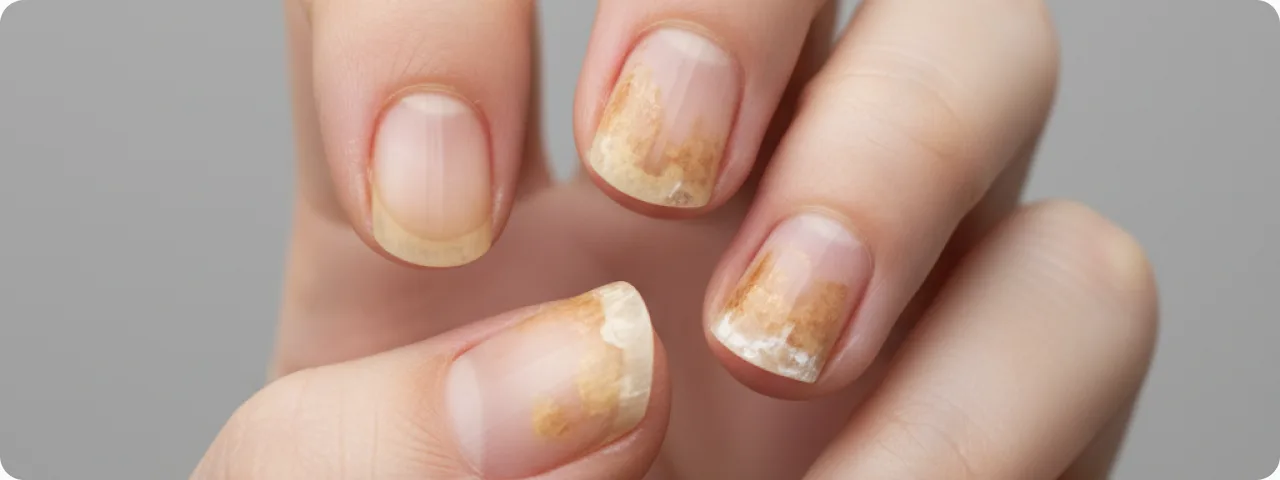
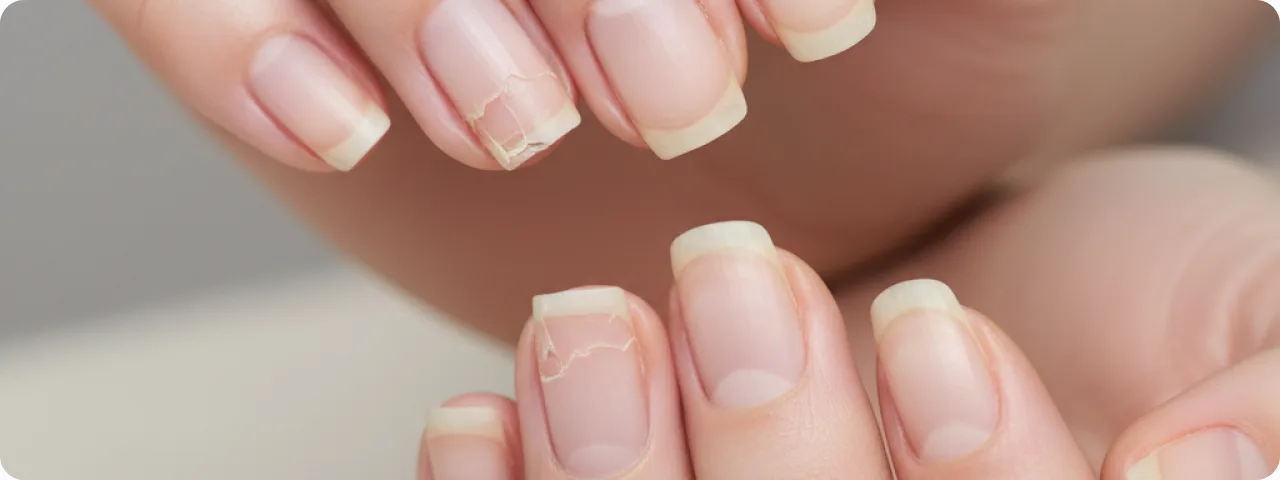
- Distal lateral subungual form (the most common, 75% of cases): the fungus enters through the hyponychium or the lateral nail folds. The first signs are a change in the colour of the free edge of the nail to yellowish or whitish, gradual thickening of the nail plate and subungual hyperkeratosis. Over time the affected area extends from the distal to the proximal edge, and the nail becomes brittle and splits. In the late stages the nail plate may be destroyed completely.
- Superficial white form (10% of cases): the fungus affects the upper layers of the nail plate directly. White, matt, sharply defined patches or streaks appear on the surface of the nail. On scraping, the affected area crumbles easily. The nail becomes rough but does not thicken greatly. This form responds best to topical treatment, because the fungus is superficial.
- Proximal subungual form (rare, 5% of cases): the fungus enters through the proximal nail fold and the matrix. A white or yellow patch appears near the cuticle and spreads towards the free edge. It is often associated with immunodeficiency (HIV infection). This form is the hardest to treat, because the matrix — the growth zone of the nail — is involved. It requires systemic antifungal therapy without exception.
- Total dystrophic form (the end stage of any form): the nail plate is completely destroyed, thickened, deformed and yellow-brown or grey-green. The nail bed is covered with hyperkeratotic material. The nail may separate partly or completely. Treatment requires systemic therapy combined with mechanical removal of the affected tissue. Full recovery takes 12–18 months.
Diagnosis: confirming onychomycosis
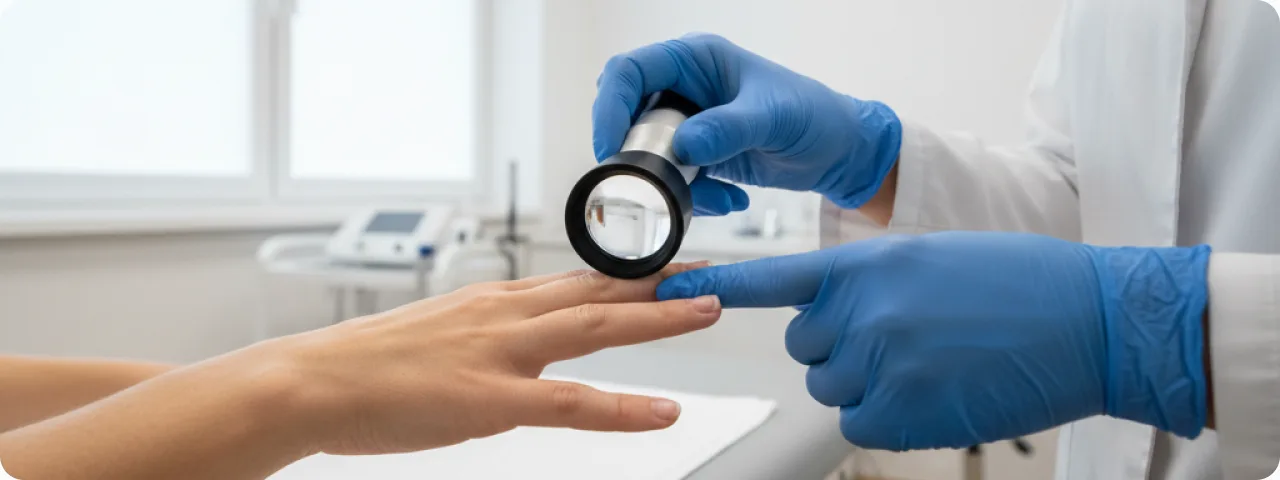
An accurate diagnosis is needed before treatment begins, because similar nail changes can be caused by psoriasis, by injury or by other diseases. Microscopy with a KOH test is the basic method: a scraping from the affected area is treated with an alkaline solution and examined under a microscope for fungal hyphae and spores. The sensitivity of the method is 60–80%. Culture (on Sabouraud medium) allows the species to be identified and its sensitivity to antifungals determined. The result is ready in 2–4 weeks. PCR is the most accurate and the fastest method (sensitivity 95%), with a result in 1–2 days. It detects fungal DNA even when very little of the nail is involved. Dermatoscopy of the nail reveals characteristic features: a "ruin-like" edge, longitudinal streaks, and yellow-white patches with indistinct borders. Histology of a PAS-stained nail biopsy is the gold standard in difficult cases, where other methods give conflicting results.
Current treatments for nail fungus
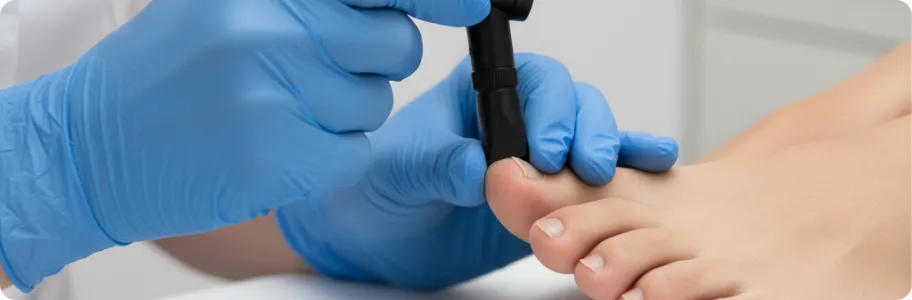
Treatment depends on the clinical form, the extent of involvement and the species. Topical therapy (where up to 50% of the nail is affected and the matrix is not involved): amorolfine 5% lacquer — applied 1–2 times a week for 6–12 months; ciclopirox 8% lacquer — applied daily, with the excess removed once a week; efinaconazole 10% solution — daily for 48 weeks (a newer preparation with better penetration). Systemic therapy (where more than 50% is affected, where the matrix is involved or where several nails are affected): terbinafine 250 mg/day — 6 weeks for the hands, 12 weeks for the feet (effectiveness 70–80%); itraconazole as pulse therapy — 200 mg twice a day for 1 week each month (2–3 pulses for the hands, 3–4 for the feet); fluconazole 150–300 mg once a week for 6–12 months. Combined therapy (a systemic plus a topical antifungal) raises effectiveness to 80–90%. Procedural treatment: medical pedicure with removal of the affected areas, and laser therapy (Nd:YAG 1064 nm) as an adjunct.
Prevention and avoiding relapse
Prevention matters greatly, because the relapse rate after treatment reaches 20–25%. Always wear your own footwear in public places — swimming pools, saunas, and the showers of gyms and hotels. Rubber sandals substantially reduce the risk of contact with fungal spores on wet surfaces. Change your socks daily and choose natural materials (cotton, bamboo) that allow ventilation. If your feet sweat heavily, use a foot antiperspirant or talc. Choose shoes made of natural materials with enough room for the toes — a damp, tight environment is ideal for fungi to multiply. After treatment has finished, apply an antifungal lacquer once a week for 3–6 months as prevention. Disinfect footwear with a chlorhexidine spray or a UV shoe dryer. Do not use other people's manicure instruments, and check that instruments are sterilised in salons. Support your immune system: a balanced diet, control of blood sugar in diabetes, and treatment of varicose veins and other vascular disease of the lower limbs.
When to see a dermatologist
See a dermatologist with an interest in mycology at the first signs of nail fungus — a change in colour, thickening or brittleness of the nail plate. Seeking help early substantially improves the chances of successful treatment and shortens it. An immediate consultation is needed if several nails are affected at once, if the fungus is progressing despite self-treatment, or if you have diabetes or impaired circulation — in such patients onychomycosis can cause serious complications, including bacterial superinfection and trophic ulcers. See a specialist too if the fungus has returned after a course of treatment — relapse calls for a change of strategy and for the organism to be identified again, since there may be reinfection with a different species or the development of resistance.
Related reading
Did not find the answer to your question?
Every case is individual. If you have noticed changes in your skin, or have symptoms that concern you, book a consultation.