Brittle nails: why they break and how to strengthen them
What are brittle nails, and how is the nail plate built?
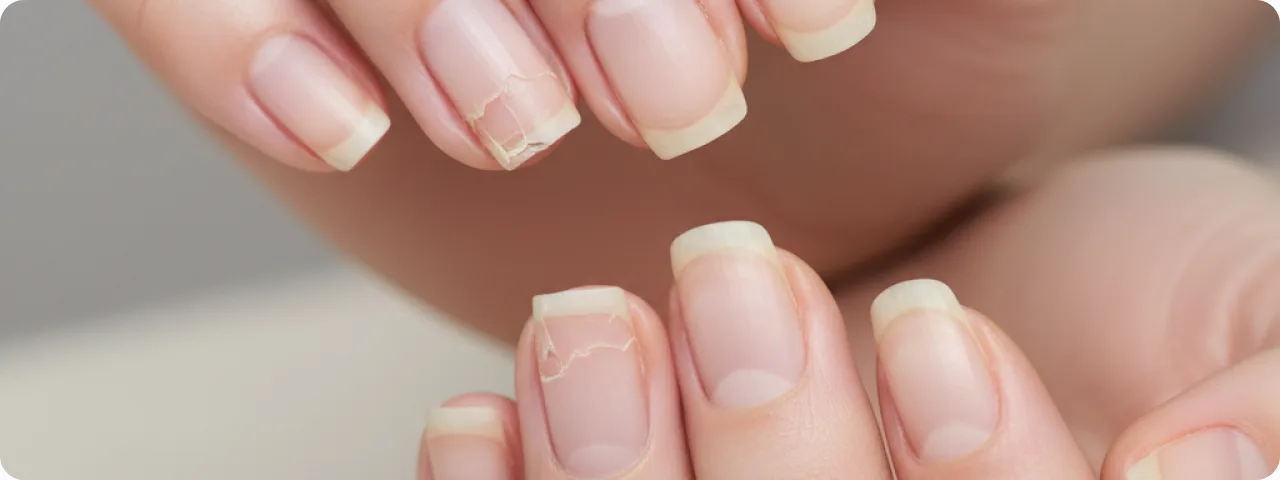
Brittle nails (onychoschizia and onychorrhexis) are a common problem affecting up to 20% of the population, with women affected twice as often as men. The nail plate is made of keratin — a protein forming dense layers joined by lipid interlayers and by disulphide cross-links. It is these bonds that give the nail its elasticity and strength. When their number falls, or the moisture balance is disturbed (the nail plate normally contains 18% water), the nail begins to split, crack and break. Onychoschizia is horizontal splitting of the nail into layers; onychorrhexis is longitudinal cracks and ridges. Both can arise on their own or against the background of systemic disease or a deficiency of trace elements. Understanding the structure of the nail helps in choosing the right strategy: the keratin layer needs protection from outside, while nourishment from within reaches the matrix — the growth zone beneath the cuticle.
The main causes of brittleness
The causes of brittle nails fall into external (exogenous) and internal (endogenous) groups, and they often act together, reinforcing one another:
- External chemical factors: regular contact with household chemicals (detergents, solvents, disinfectants) without gloves destroys the lipid layer between the keratin plates. Frequent use of acetone-based nail polish removers dehydrates the nail plate. Wearing gel polish for long periods without breaks, and removing it aggressively (scraping rather than soaking), damages the upper layers of the nail mechanically. Excessive use of antibacterial hand products also dries the nails.
- Deficiency of trace elements and vitamins: a lack of iron (even latent iron deficiency without anaemia) is one of the most frequent causes of brittleness. A deficiency of biotin (vitamin B7) disrupts keratin synthesis. Insufficient zinc, calcium, silicon and sulphur weakens the structural bonds of the nail plate. Vitamins A, C and E are needed for normal growth and hydration of the nails. Mono-diets and restrictive eating often lead to multiple deficiencies.
- Hormonal and systemic factors: hypothyroidism slows the metabolism and the growth of the nails and makes them thin and brittle. The menopause and falling oestrogen levels reduce hydration and elasticity. Anaemia, diabetes, gastrointestinal disease (coeliac disease, chronic gastritis) and malabsorption of nutrients are all reflected in the state of the nails as an indicator of general health.
- Mechanical and everyday causes: constant contact with water (washing up, working in a damp environment) causes cycles of swelling and drying that break down the keratin layers. A poor manicure — over-filing, using metal files instead of glass ones, cutting the nails with scissors instead of filing them — creates microcracks. Nail biting (onychophagia) and using the nails as a tool (to open or prise things) causes repeated mechanical damage.
Diagnosis: finding the cause of brittleness
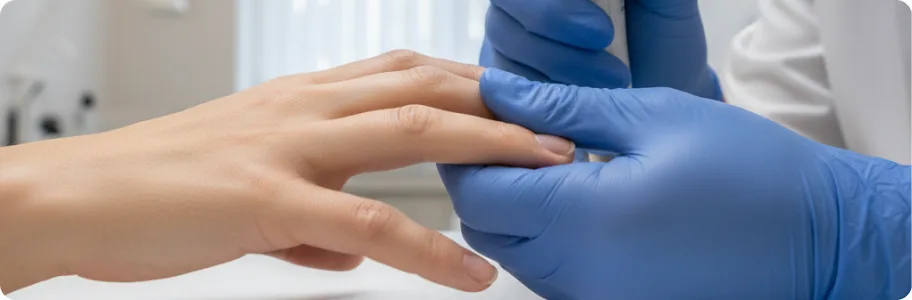
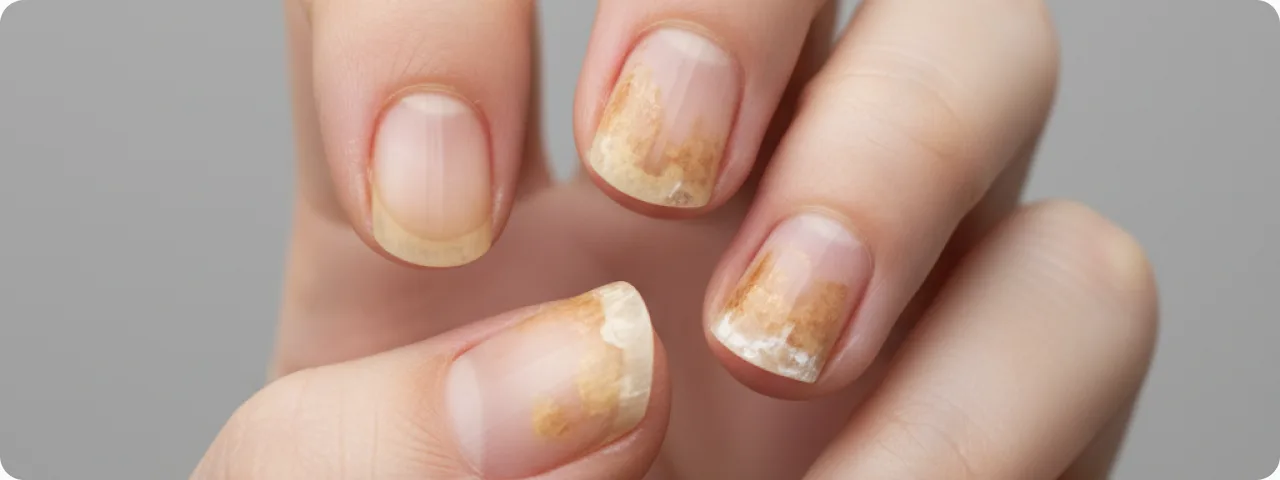
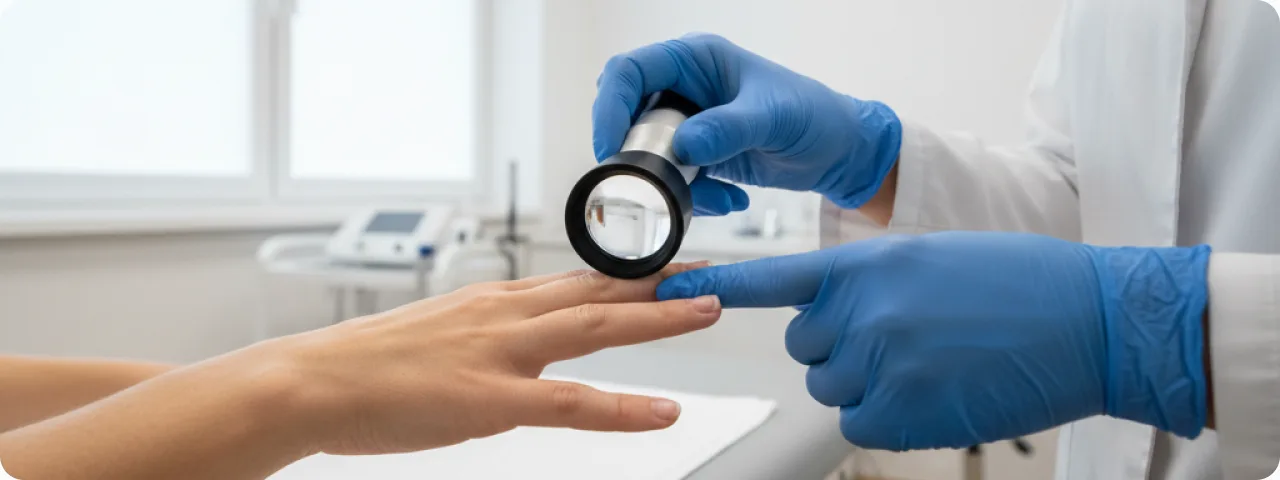
If the nails break despite proper care, it is worth seeing a dermatologist to establish the underlying cause. Examining the nails is informative in itself: transverse grooves (Beau's lines) indicate a past illness or period of stress, a spoon shape (koilonychia) indicates iron deficiency, and a yellowish tone suggests a fungal infection or liver disease. Blood tests for ferritin, iron, zinc, biotin and thyroid hormones (TSH, T4) help to identify systemic causes. Spectral analysis of the nail plate measures trace elements in the nail itself. Microscopy of a scraping excludes fungal infection (onychomycosis), which also causes brittleness. Dermatoscopy of the nail reveals structural changes invisible to the naked eye: microcracks, disturbance of the layered architecture and changes in the thickness of the plate. In difficult cases a referral to an endocrinologist or gastroenterologist may be needed.
How to strengthen and treat brittle nails
The approach must be comprehensive — from within and from outside at the same time. From within: taking biotin (2.5–5 mg a day for 3–6 months) has been shown clinically to improve the thickness and strength of the nails by 25–30%. A balanced diet with enough protein (1 g/kg of body weight) and foods rich in iron (red meat, liver, spinach), zinc (pumpkin seeds, seafood), silicon (wholegrains, oats) and calcium (dairy, sardines). Omega-3 fatty acids improve the hydration of the nail plate. From outside: apply a cuticle oil daily (almond, jojoba, vitamin E), massaging it in. Use treatment lacquers with calcium, keratin or diamond powder. A protective coating such as the IBX System or similar fills microcracks. Paraffin baths give deep hydration. A proper manicure: file in one direction with a glass or ceramic file, and shape the nails oval or squoval, avoiding sharp corners.
Prevention: how to keep nails from becoming brittle
Preventing brittle nails means changing everyday habits and protecting the nail plate from aggressive factors. Always wear rubber gloves when washing up, cleaning and using household chemicals — even brief contact with alkaline products destroys the protective layer of the nails. Moisturise the hands and nails with a cream after every hand wash, paying particular attention to the cuticle and the nail plate. Choose gentle acetone-free polish removers and take breaks between gel manicures (at least 2 weeks every 3–4 months). Keep your fluid balance up — drink enough water (30 ml/kg of body weight a day). Avoid abrupt changes in temperature: wear gloves in winter, because cold narrows the vessels and reduces the blood supply to the nail matrix. Do not use your nails as a tool to open, prise or scrape. File the nails regularly and do not let them grow too long, which increases the risk of breakage. Eat a balanced diet and, if necessary, take a multivitamin with biotin, iron and zinc.
When to see a dermatologist
See a dermatologist if brittleness does not improve after 2–3 months of proper care and a balanced diet — this may point to hidden systemic disease. An immediate consultation is needed for a sudden change in the colour of the nails (yellowing, bluish discoloration, white patches), for the appearance of transverse grooves, or if the nails stop growing altogether. See a doctor too if brittleness is accompanied by hair loss, dry skin or chronic fatigue — together these symptoms may indicate hypothyroidism, anaemia or a deficiency of trace elements. The doctor will order the necessary tests, establish the underlying cause and select an individual treatment plan — from adjusting the diet to replacement therapy with iron or thyroid hormones.
Related reading
Did not find the answer to your question?
Every case is individual. If you have noticed changes in your skin, or have symptoms that concern you, book a consultation.