Nail fungus: treatment and prevention
What is nail fungus and why does it occur?
Onychomycosis (nail fungus) is an infection of the nail plates caused by dermatophytes (Trichophyton rubrum, T. mentagrophytes), yeasts (Candida) or moulds. According to WHO data, onychomycosis affects 10–12% of the world's population, and up to 30% of people over 60. Fungi enter the nail plate through microcracks, through damage to the cuticle, or from beneath the free edge of the nail. The main risk factors are: using swimming pools, saunas and gyms without your own footwear, wearing tight or synthetic shoes, diabetes, impaired peripheral circulation, immunodeficiency, and prolonged use of antibiotics or corticosteroids. The infection progresses slowly — several weeks to several months may pass between the initial infection and any visible signs.
Symptoms of nail fungus
Onychomycosis has several clinical forms, each with its own characteristic features. The main symptoms include:
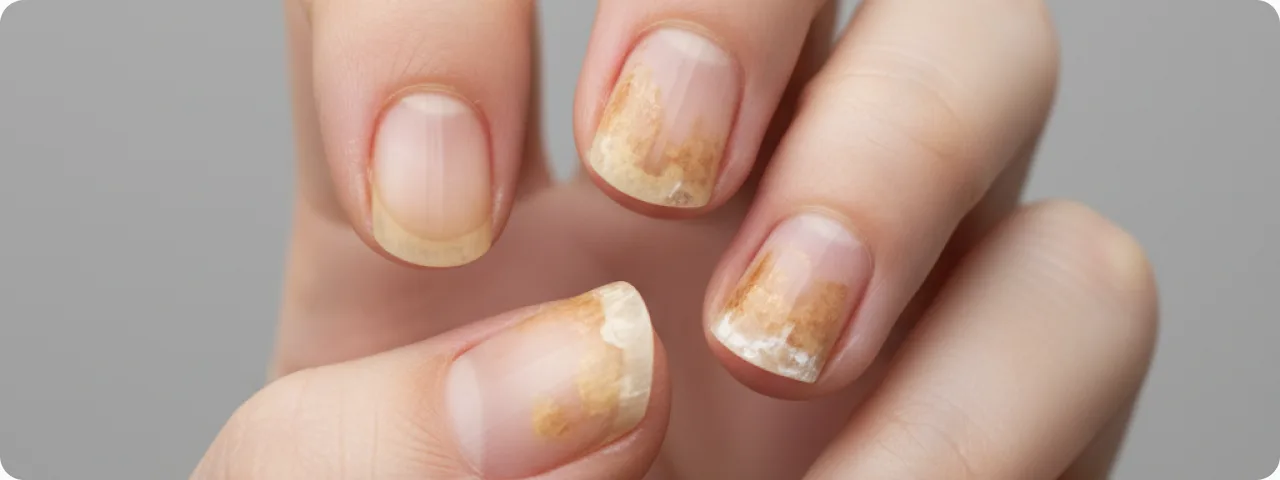
- a change in the colour of the nail: the nail plate takes on a yellowish, greyish, brown or white tone. The change usually begins at the free edge or the sides of the nail and gradually spreads towards the base. In the distal lateral form, characteristic yellow streaks or patches appear; in the superficial white form, chalky white islands appear on the surface of the nail.
- thickening and deformity: the nail plate becomes thicker and uneven, with transverse or longitudinal ridges. Hyperkeratosis of the nail bed lifts the nail and causes it to separate (onycholysis). In advanced forms the nail may take the shape of a bird's claw (onychogryphosis). Thickening makes it hard to cut the nails and to wear closed shoes.
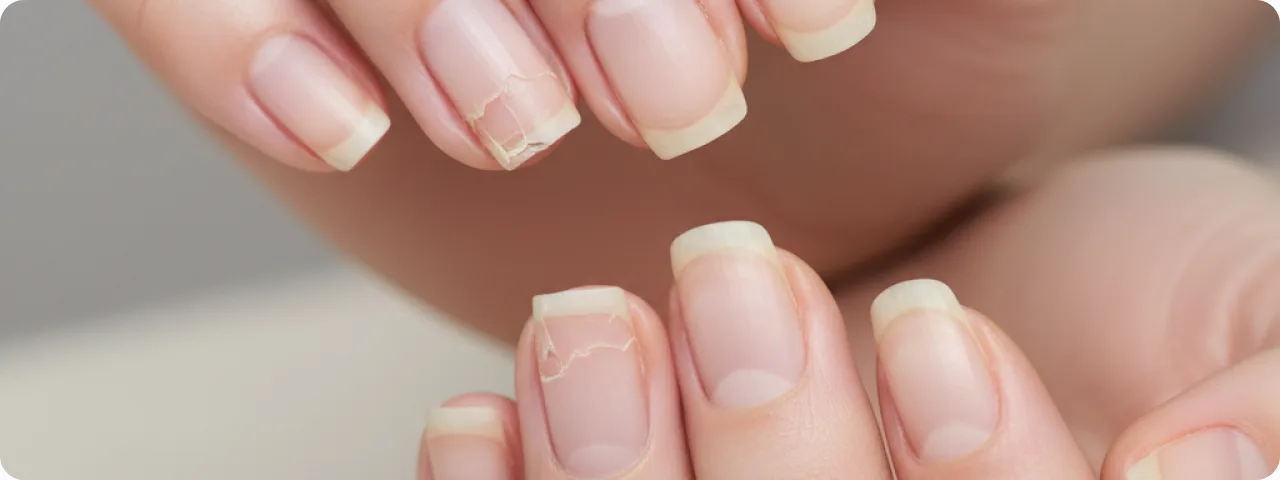
- brittleness and splitting: the affected nail becomes brittle, crumbles easily at the free edge and splits into layers. The nail plate loses its natural shine and becomes matt and rough. As the keratin layer breaks down, characteristic powdery debris appears between the nail and the nail bed — an accumulation of fungal hyphae and destroyed keratin.
- an unpleasant smell and discomfort: in severe onychomycosis a characteristic unpleasant smell develops, caused by the breakdown of keratin and by bacterial superinfection. Patients may feel pain on pressing the nail, discomfort when walking (where the toenails are affected) and itching of the nail folds.
Diagnosing onychomycosis
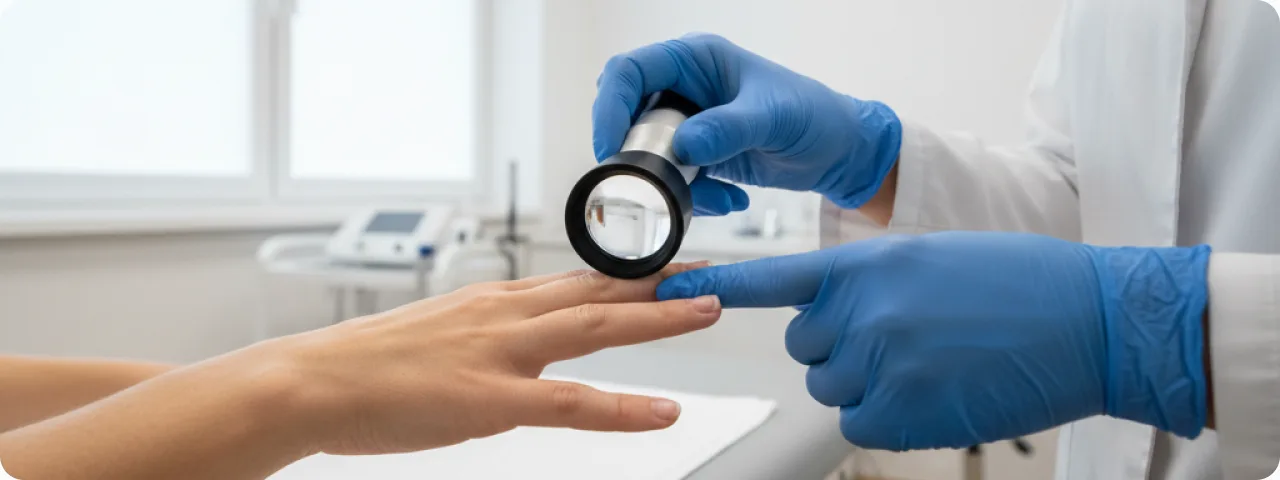
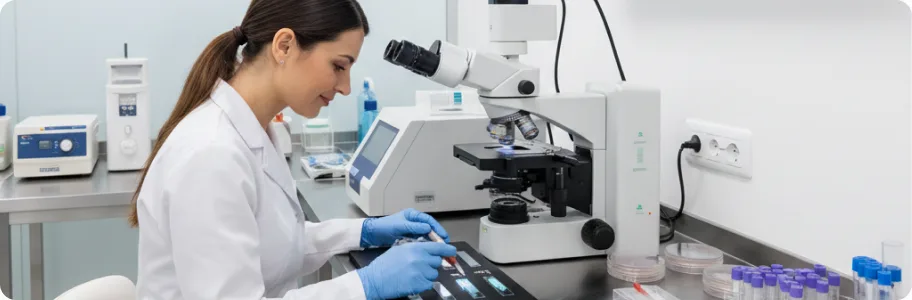
Accurate diagnosis is the key to effective treatment, since not every nail change is fungal. Microscopy with a KOH test is the basic method: a scraping from the affected nail is treated with potassium hydroxide solution, which dissolves the keratin, and fungal hyphae and spores are visualised under the microscope. Culture (on Sabouraud medium) is the gold standard for identifying the organism: it determines the species and its sensitivity to antifungals, with a result in 2–4 weeks. PCR is a modern molecular method that identifies the organism's DNA within 24–48 hours with a sensitivity of up to 95%. Dermatoscopy of the nails (onychoscopy) is a non-invasive way of visualising structural changes in the nail plate and the nail bed. Histopathology with PAS staining is the most accurate method in doubtful cases.
Current treatments for nail fungus
Treatment depends on the form, the extent of involvement and the species. Topical therapy: amorolfine (5% lacquer) — applied 1–2 times a week for 6–12 months, effective where less than 50% of the nail plate is affected and the matrix is not involved. Ciclopirox (8% lacquer) — applied daily with periodic removal, a course of 48 weeks. Systemic therapy: terbinafine (250 mg/day) — the drug of choice in dermatophyte infection, a course of 6 weeks for the fingernails and 12 weeks for the toenails, effectiveness 70–80%. Itraconazole as pulse therapy: 200 mg twice a day for 1 week followed by a 3-week break, 2–3 pulses for the hands and 3–4 for the feet. Fluconazole (150–300 mg/week) is an alternative in Candida infection. Combined therapy (a systemic plus a topical drug) raises effectiveness to 80–90%. Laser treatment (Nd:YAG, 1064 nm) is an adjunct that destroys fungal structures by heat.
Prevention and nail care
Preventing relapse: disinfect footwear — with formalin (25%), chlorhexidine or a UV steriliser every 2–3 days during the course of treatment and for 1 month afterwards. Use your own manicure and pedicure instruments and disinfect them regularly. Wear your own footwear in swimming pools, saunas and gyms. Choose shoes made of natural materials and avoid tight or synthetic ones. Change your socks daily, preferring cotton or wool. After washing, dry between the toes thoroughly — a damp environment encourages fungal growth. Support your immune system: a balanced diet with enough vitamin A, vitamin E, biotin and zinc, which support nail health. Keep blood sugar under control in diabetes. After the main course of treatment, continue applying an antifungal lacquer preventively for 3–6 months.
When to see a dermatologist
See a dermatologist if you notice a change in the colour or texture of your nails, or if a nail has begun to thicken, crumble or separate from the nail bed. An immediate consultation is needed for pain, swelling or redness of the nail folds — this may indicate an added bacterial infection (paronychia). See a doctor without fail if you have diabetes or impaired circulation in the lower limbs — in such patients onychomycosis can lead to serious complications, including cellulitis and diabetic foot. See a specialist too if self-treatment with over-the-counter products has produced no result within 2–3 months, or if the fungus is spreading to new nails.
Related reading
Did not find the answer to your question?
Every case is individual. If you have noticed changes in your skin, or have symptoms that concern you, book a consultation.