Nail psoriasis: telling it from fungus, and treating it
What is nail psoriasis and why does it occur?
Nail psoriasis (psoriatic onychodystrophy) is a chronic autoimmune disease of the nail plates, occurring in 50–80% of patients with skin psoriasis and in 80–90% of those with psoriatic arthritis. In 5–10% of cases nail psoriasis may be the only manifestation of the disease, without the typical skin plaques. The cause is accelerated growth of the cells of the nail matrix and bed as a result of immune inflammation. T lymphocytes attack the nail cells in error, causing them to proliferate excessively. Triggers for flares: stress, injury to the nails (the Koebner phenomenon), infection, an abrupt change of climate, and certain drugs (beta blockers, lithium, antimalarials). Genetic predisposition plays a key role — the risk is 3–5 times higher where there is psoriasis in the family history.
Signs of nail psoriasis
Nail psoriasis has characteristic features, which depend on whether the matrix or the nail bed is affected:
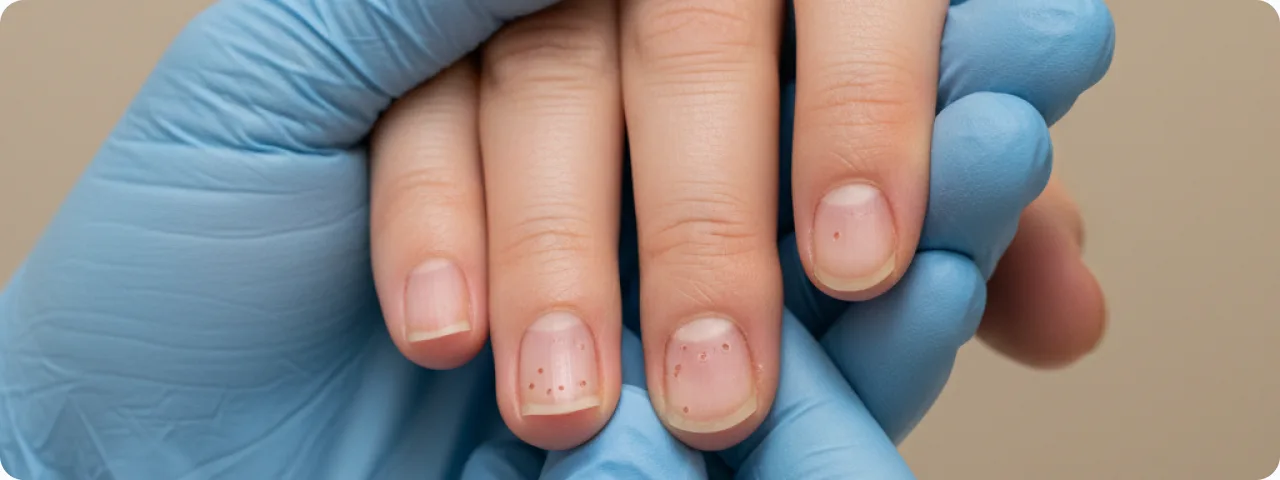
- Pitting (thimble sign): the most typical feature — multiple small pits 0.5–2 mm across appear on the surface of the nail plate, scattered or in rows. They arise from focal parakeratosis in the proximal nail matrix. The number and depth of the pits indicate how active the disease is. This sign occurs in 70% of patients with nail psoriasis.
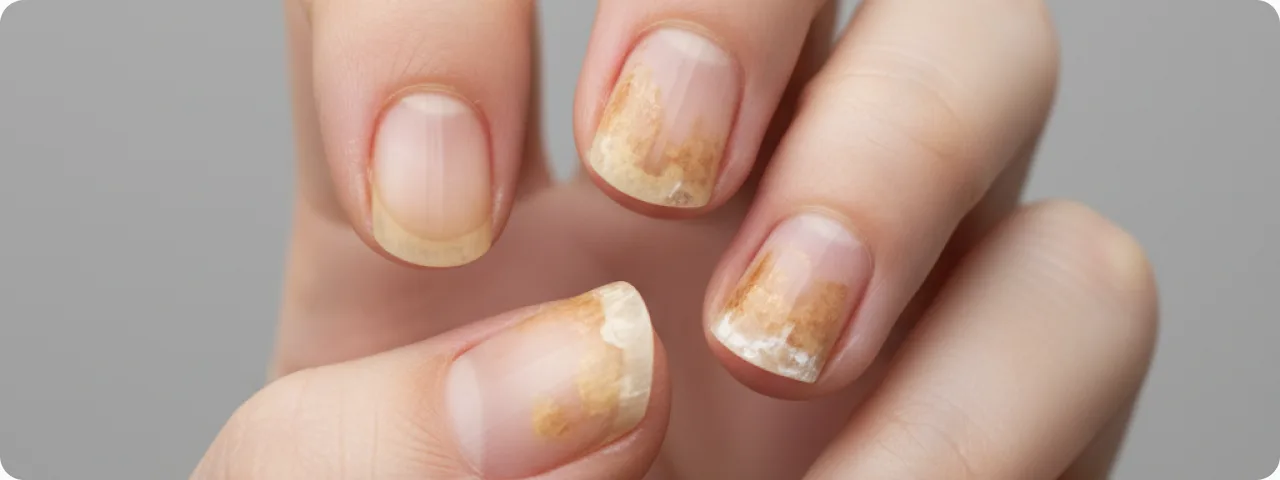
- Onycholysis (separation of the nail): the nail plate lifts from the bed, beginning at the distal or lateral edge. Air accumulates beneath the separated area, giving the nail a whitish or greyish tone. The "oil drop" sign is characteristic — a yellow-brown area beneath the nail resembling a drop of oil. Onycholysis in psoriasis differs from the fungal kind by the erythematous rim at the edge of the separation.
- Subungual hyperkeratosis: thickening of the skin beneath the nail plate from excessive keratinisation of the cells of the nail bed. The nail lifts, becomes thicker and may deform. Silvery-white scales accumulate beneath the nail (unlike the yellowish material seen in fungal disease). Where hyperkeratosis is marked, the nail may take the shape of a ram's horn, which makes wearing shoes considerably harder.
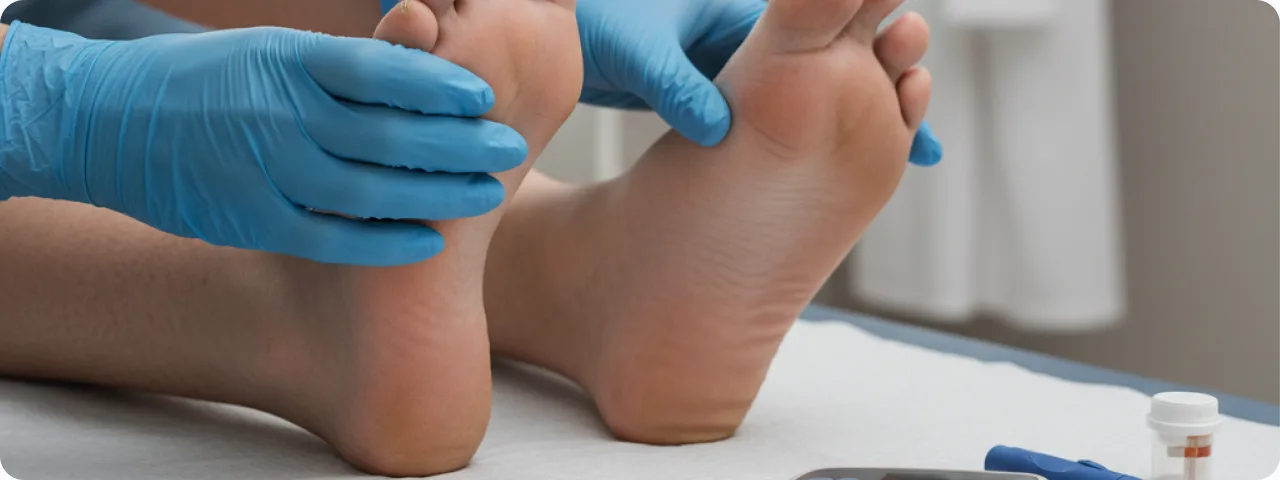
- Brittleness and destruction of the nail: the nail plate becomes brittle, crumbles at the distal edge, and its surface is uneven with longitudinal or transverse ridges (Beau's lines). In severe disease the nail may be destroyed completely (psoriatic onychomadesis). The fingernails are affected more often than the toenails, but on the feet the course is usually more severe because of mechanical loading and poorer blood supply.
How to tell nail psoriasis from fungus
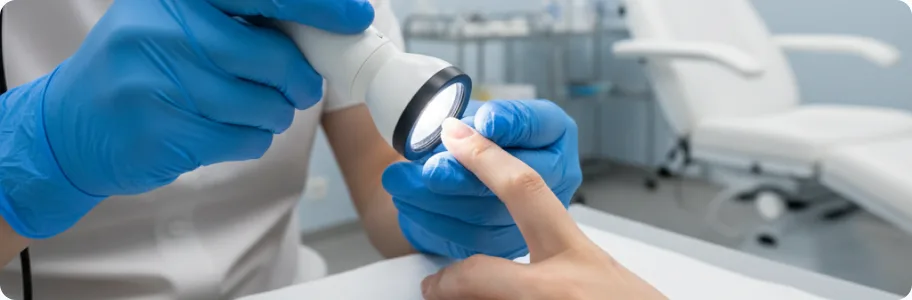
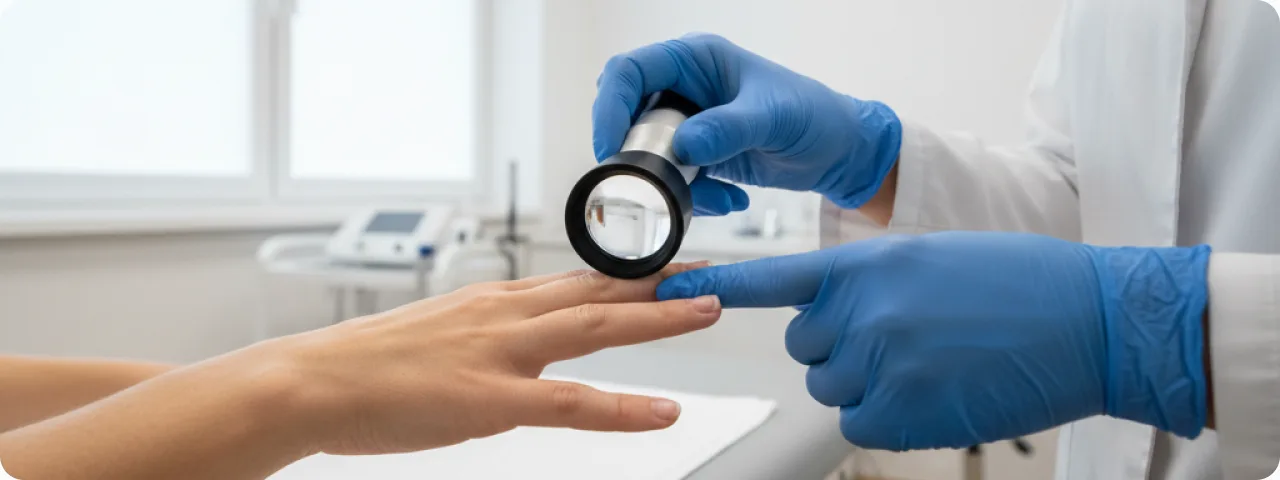
Distinguishing nail psoriasis from onychomycosis is crucial, because the treatment is entirely different. Microscopy with a KOH test and fungal culture are essential to exclude infection. In psoriasis the result is negative (no fungi are found). Dermatoscopy of the nail shows changes typical of psoriasis: dilated capillaries of the nail bed, splinter haemorrhages and the characteristic oil-drop pattern. Histology of a nail biopsy is the gold standard in difficult cases: in psoriasis it shows parakeratosis, Munro's neutrophilic microabscesses and acanthosis. Important differences: psoriasis affects several nails at once and symmetrically, whereas fungus usually begins in a single nail; in psoriasis there are often skin plaques elsewhere on the body; and oil-drop patches and pitting are typical of psoriasis specifically. It should be remembered that in 10–30% of cases psoriasis and fungal nail infection coexist.
Current treatment of nail psoriasis
Treating nail psoriasis calls for patience — a nail renews itself completely in 4–6 months on the hands and 12–18 months on the feet. Topical therapy (first line): calcipotriol (a vitamin D3 analogue) combined with betamethasone is the gold standard of topical treatment, applied to the nail bed and the nail folds. Tacrolimus (0.1% ointment), a calcineurin inhibitor, is effective in less severe disease. Corticosteroid injections (triamcinolone 2.5–10 mg/ml) into the nail matrix are painful but effective where a single nail is involved. Systemic therapy (in severe disease): methotrexate (10–25 mg/week) is effective where psoriatic arthritis is also present. Ciclosporin and acitretin are alternative systemic drugs. Biologic therapy: TNF-α inhibitors (adalimumab, etanercept), IL-17 inhibitors (secukinumab, ixekizumab) and IL-23 inhibitors (guselkumab) represent the most modern approach, with the greatest effectiveness — up to 80–90% improvement on the NAPSI index.
Preventing flares and caring for the nails
Good nail care is an important part of treatment. Cut the nails short and straight — long nails are more prone to injury, which provokes flares (the Koebner phenomenon). Avoid aggressive manicures and pedicures: do not cut the cuticle, and do not use sharp instruments beneath the nail plate — any microtrauma can provoke a flare. Wear cotton gloves when working with household chemicals and water — chemical irritants and prolonged contact with moisture worsen the state of the nails. Moisturise the nail plates and nail folds with specific oils (jojoba oil, vitamin E) every day before bed. Do not use the nails as tools — do not open packaging or scrape off labels with them. Where the toenails are affected, choose roomy shoes with a soft toe box to reduce pressure on the nail plates. Keep stress under control — meditation, exercise and enough sleep help to reduce the frequency of psoriasis flares.
When to see a dermatologist
See a dermatologist if you notice a change in the colour, shape or texture of the nail plates — pitting, ridges, separation or thickening. An immediate consultation is needed if the nail changes are accompanied by pain or swelling in the finger joints — this may indicate psoriatic arthritis, which requires early, aggressive treatment to prevent irreversible joint destruction. See a specialist without fail if you cannot tell psoriasis from fungus yourself — treating psoriasis with antifungals by mistake is ineffective and delays the correct diagnosis. See a doctor too if the prescribed treatment has produced no result within 3–6 months, if nail psoriasis is significantly affecting your quality of life (pain, appearance, limitations at work), or if you have noticed signs of a secondary fungal infection on top of existing psoriasis.
Related reading
Did not find the answer to your question?
Every case is individual. If you have noticed changes in your skin, or have symptoms that concern you, book a consultation.