Nail changes as a signal from the body: what your nails say about your health
Contents
Why the nails are a mirror of internal health
The nail plate is a unique indicator of the state of the body, reflecting the metabolic processes of the past 6–9 months. Nails grow at 3–4 mm a month on the hands and 1–1.5 mm on the feet, so any disturbance leaves a record in the form of a change in colour, texture or shape. Dermatologists recognise more than 30 different nail changes, each of which can point to a particular systemic disease. The nail is made of keratin — the same protein that forms the hair and the outer layer of the skin. It is nourished through the matrix, the growth zone, which is sensitive to changes in blood supply, hormone levels and trace elements. When the body is short of iron, zinc or B vitamins, the nail plate reacts first — long before other symptoms appear. That is why an experienced doctor always looks at a patient's nails during an examination.
Changes in nail colour and what they mean
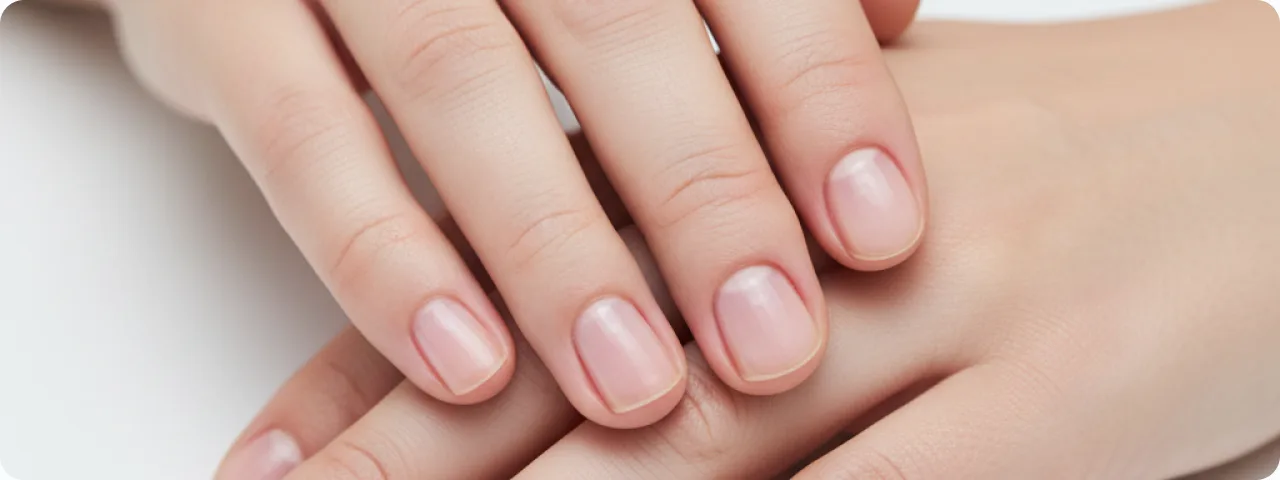
The colour of the nail plate is one of the most informative signs. A healthy nail has an even pink tone with a clear white lunula at the base.
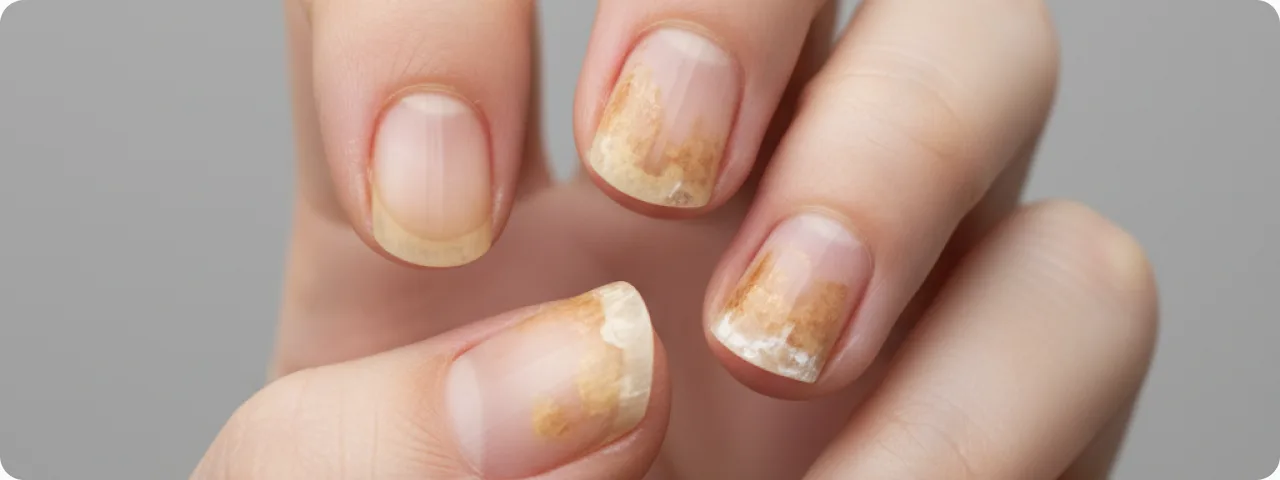
- Yellow nails: most often indicate a fungal infection (onychomycosis), but they can also point to lung disease, lymphoedema or yellow nail syndrome — a rare condition associated with impaired lymphatic drainage and pleural effusion. In smokers the yellow tone is caused by tars in tobacco smoke. Prolonged use of dark nail polish can also cause yellowing, which fades after a break.
- White nails (leukonychia): isolated white spots are usually the result of microtrauma to the matrix and need no treatment. Complete whitening of the nail (Terry's nails), however, may signal cirrhosis of the liver, heart failure or diabetes. Half-and-half nails — white proximally and brown distally — are characteristic of chronic kidney failure and are known as Lindsay's nails.
- Bluish nails (cyanosis): a blue or purple tone indicates impaired oxygenation of the blood — disease of the heart, the lungs or the peripheral vessels. Raynaud's disease causes episodic blueness of the nails in the cold. Some medications (minocycline, antimalarials) can also turn the nail plate bluish.
- Dark streaks on the nails (melanonychia): longitudinal brown or black lines require a dermatological consultation without fail, because they may be a sign of subungual melanoma, an aggressive form of skin cancer. Benign melanonychia is more common in people with darker skin phototypes. Hutchinson's sign — spread of pigment onto the nail fold — is a warning sign requiring biopsy.
Changes in the shape and texture of the nails
The shape of the nail plate may change over years, unnoticed by the patient, but for a doctor these changes are important diagnostic markers. Koilonychia (spoon nails) — a concave nail plate that will hold a drop of water — is a classic sign of iron deficiency anaemia, haemochromatosis or hypothyroidism. Clubbing — thickening of the distal phalanges with the angle between the nail and the nail bed exceeding 180° — indicates chronic hypoxia in lung disease (cancer, bronchiectasis, fibrosis), heart disease (cyanotic defects) or liver disease (cirrhosis). Beau's lines — transverse depressions in the nail — reflect a temporary interruption of growth caused by severe illness, surgery or stress. The distance from the base of the nail shows when the event occurred. Onycholysis — separation of the nail from the bed — is associated with hyperthyroidism, psoriasis, fungal infection or injury.
Nails and systemic disease: the key markers
Cardiovascular disease: linear haemorrhages beneath the nail (splinter haemorrhages) may be a sign of infective endocarditis — a bacterial infection of the heart valves. Swelling of the nail fold sometimes accompanies systemic vasculitis. Thyroid disease: in hyperthyroidism the nails become thin and shiny with a wavy surface and a tendency to onycholysis (Plummer's nail). Hypothyroidism causes dryness, brittleness and slow growth. Psoriasis: pitting, oil-drop patches, onycholysis and subungual hyperkeratosis occur in 50–80% of patients with psoriatic arthritis, often preceding joint involvement. Anaemia and trace element deficiencies: brittle nails with longitudinal ridges indicate iron deficiency; white spots indicate a lack of zinc; splitting indicates a deficiency of calcium or biotin. Liver disease: Terry's nails (white with a narrow pink band at the tip), spider angiomas around the nails and the characteristic "lacquered" appearance of the palms accompany cirrhosis and chronic hepatitis.
When nail changes need investigating
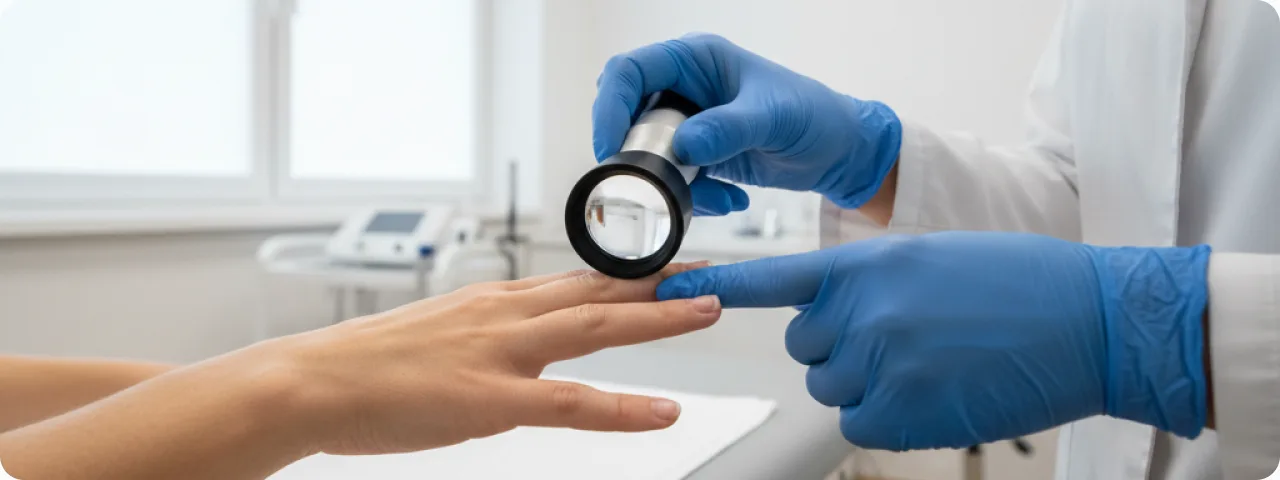
Not every nail change indicates serious disease — most are traumatic or cosmetic in origin. There are, however, red flags that call for medical assessment. A single dark band that has appeared on one nail with no history of injury — dermatoscopy is needed to exclude melanoma. Changes that have appeared on all the nails at once — these may indicate systemic disease. Nail changes combined with other symptoms: fatigue, breathlessness, swelling, weight loss, fever. Rapid progression of deformity or of a colour change — particularly where the process develops over weeks. Pain, swelling or purulent discharge from under the nail plate require prompt consultation. Remember: seeing a dermatologist in good time about a "minor" nail complaint can help to detect serious disease at an early stage, when treatment is most effective.
Prevention and keeping the nails healthy
Healthy nails are the result of a balanced diet and proper care. Ensure enough protein (1.2–1.5 g/kg of body weight), iron (red meat, pulses, spinach), zinc (pumpkin seeds, eggs), biotin (nuts, avocado) and B vitamins. Avoid harsh chemicals without gloves — detergents and acetone dry out the nail plate. Do not cut the cuticle — it protects the matrix from infection; instead, push it back gently after a soak. Use a moisturising hand and nail cream every day, particularly in winter. Give the nails a rest from gel polish and extensions — a permanent coating makes early changes impossible to see. Wear gloves when gardening and cleaning. Check the state of your nails regularly in good light — an early look can protect your health and even save your life.
Related reading
Did not find the answer to your question?
Every case is individual. If you have noticed changes in your skin, or have symptoms that concern you, book a consultation.