PRP therapy for restoring hair growth
What is PRP therapy?
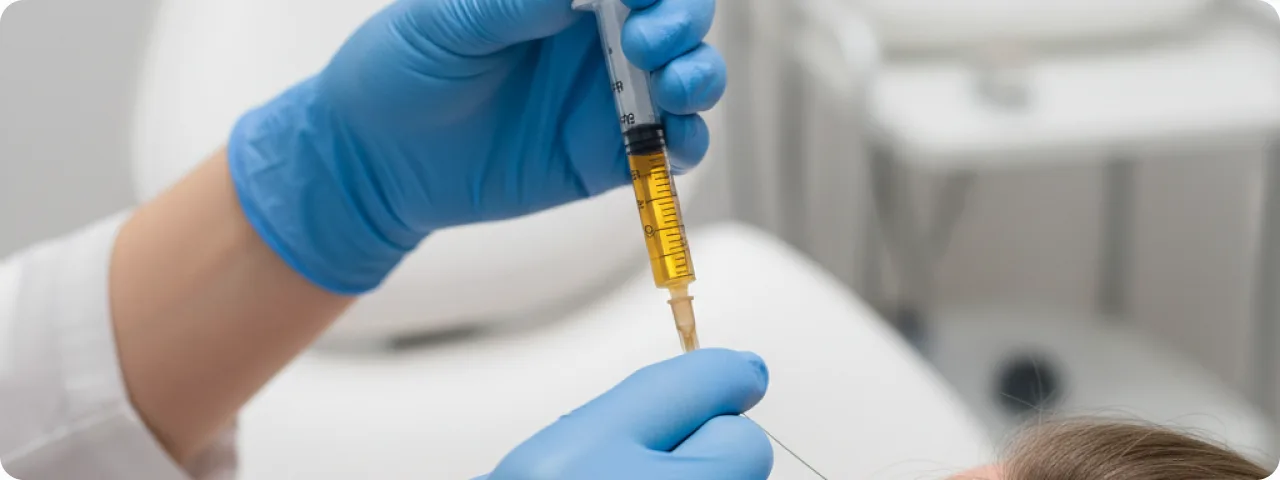
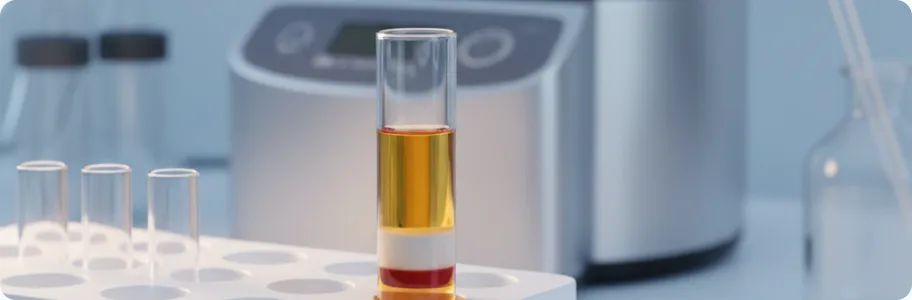
PRP therapy (Platelet-Rich Plasma) is an injection technique in which the patient's own blood is centrifuged to obtain plasma with a high concentration of platelets. Platelets contain growth factors (PDGF, VEGF, EGF, TGF-β) which, when injected into the scalp, stimulate the hair follicles, improve microcirculation and initiate tissue regeneration. The method is used in androgenetic alopecia, in diffuse hair loss and as supportive therapy after transplantation.
Indications for PRP therapy
PRP therapy is recommended in various forms of alopecia and in disorders of hair growth. The main indications include:
- androgenetic alopecia (AGA): the most common form of hair loss in men and women, associated with genetic sensitivity of the follicles to dihydrotestosterone (DHT). PRP slows the miniaturisation of the follicles.
- diffuse hair loss: even thinning caused by stress, iron deficiency or hormonal changes after childbirth or the menopause. The growth factors in the plasma restore the anagen phase.
- alopecia areata: autoimmune hair loss, in which PRP modulates the local immune response and reduces inflammation around the follicles, helping growth to return in the affected patches.
- after hair transplantation: injecting PRP into the transplanted area improves graft take, speeds up healing and stimulates growth of the transplanted follicles in the first months after surgery.
How the procedure is carried out
A PRP session takes 45–60 minutes. First, 15–20 ml of venous blood is drawn and placed in special tubes with an anticoagulant. The blood is centrifuged for 10–15 minutes to separate it into fractions. The resulting platelet-rich plasma is injected into the scalp with microinjections to a depth of 1–2 mm, spaced 1–1.5 cm apart across the whole area of thinning. A local anaesthetic is applied before the injections for the patient's comfort. The procedure is done on an outpatient basis, and normal activities can be resumed afterwards.
Results and effectiveness
Clinical studies confirm the effectiveness of PRP in androgenetic alopecia: after a course of 3–4 sessions at intervals of 4–6 weeks, patients report reduced shedding within 2–3 weeks, the appearance of new vellus hairs within 2–3 months, and an increase in density of 20–30% within 6–12 months. The results are confirmed by trichoscopy and phototrichogram. The effect depends on the stage of the alopecia, the patient's age and the quality of the plasma obtained. The best results are achieved in the early stages, when the follicles are still present but miniaturised.
The treatment protocol
A standard course of PRP therapy consists of 3–6 sessions at intervals of 3–4 weeks. After the initial course, maintenance sessions every 3–6 months are recommended to preserve the result. To increase effectiveness, PRP is combined with mesotherapy using vitamin cocktails, with minoxidil and with low-level laser therapy (LLLT). In androgenetic alopecia, finasteride or dutasteride is prescribed alongside it (in men). It is important to follow the doctor's advice on scalp care between sessions: avoid washing for 24 hours, avoid the sauna for 48 hours, and limit physical exertion on the day of the procedure.
Advantages and safety
PRP therapy is considered one of the safest treatments for alopecia, because the patient's own blood is used — the risk of allergic reactions and of rejection is minimal. Contraindications include clotting disorders, cancer, acute infection and pregnancy. Side effects are limited to temporary redness and slight tenderness at the injection sites, which resolve within 1–2 days.
Related reading
Did not find the answer to your question?
Every case is individual. If you have noticed changes in your skin, or have symptoms that concern you, book a consultation.