Seborrhoeic dermatitis of the scalp: causes and treatment
What is seborrhoeic dermatitis?
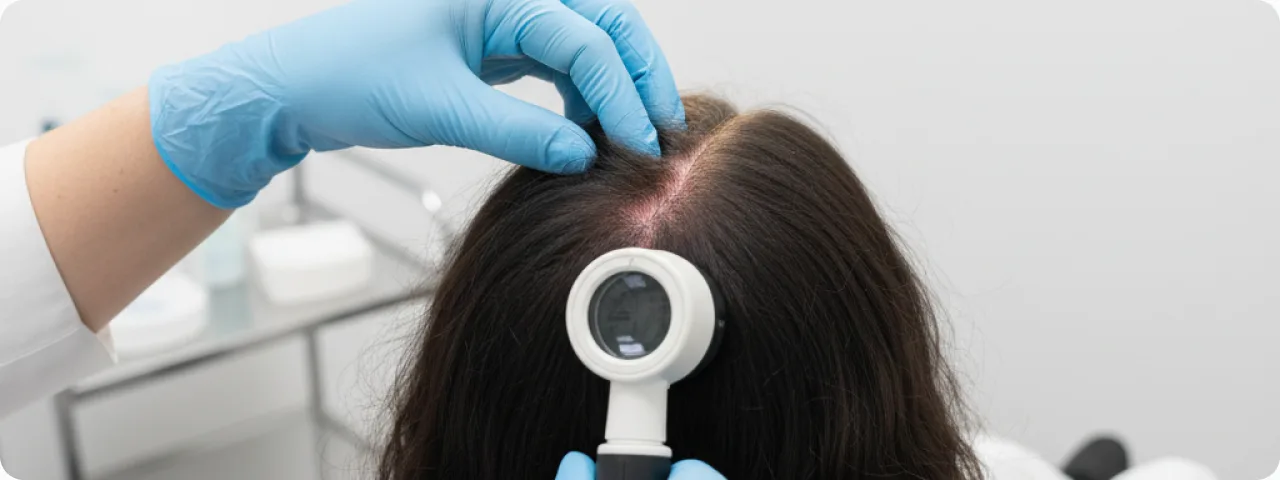
Seborrhoeic dermatitis is a chronic inflammatory skin disease affecting areas where the sebaceous glands are most active. On the scalp it presents with flaking, redness, itching and the formation of greasy scales or crusts. The disease follows a relapsing course and occurs in 3–5% of the adult population, more often in men.
Causes and risk factors
Seborrhoeic dermatitis develops through a combination of factors, from microbiological to immunological. The main causes include:
- the Malassezia fungus: an opportunistic yeast-like fungus that lives on everyone's skin, but which, when it multiplies excessively, causes an inflammatory reaction and irritation of the scalp.
- excessive sebum production: overactivity of the sebaceous glands creates a favourable environment for fungal flora to multiply and disrupts the skin's natural barrier.
- immunological disorders: reduced local skin immunity, states of stress, HIV infection and neurological disease (Parkinson's disease) substantially increase the risk of developing dermatitis.
- external triggers: an abrupt change of climate, excessive use of harsh hair products, irregular washing, chronic stress and a poor diet high in fatty food.
Symptoms of seborrhoeic dermatitis
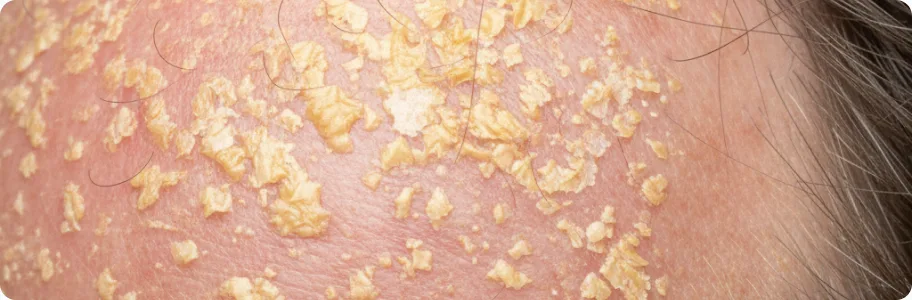
The main symptoms of seborrhoeic dermatitis of the scalp include: flaking of the skin with white or yellowish scales (dandruff), redness and inflammation of the skin beneath the hair, moderate or intense itching that increases with sweating, the formation of greasy yellow crusts, a feeling of tightness, and in severe cases hair loss in the worst affected areas. Symptoms usually flare in the cold season and during periods of stress.
Diagnosing seborrhoeic dermatitis
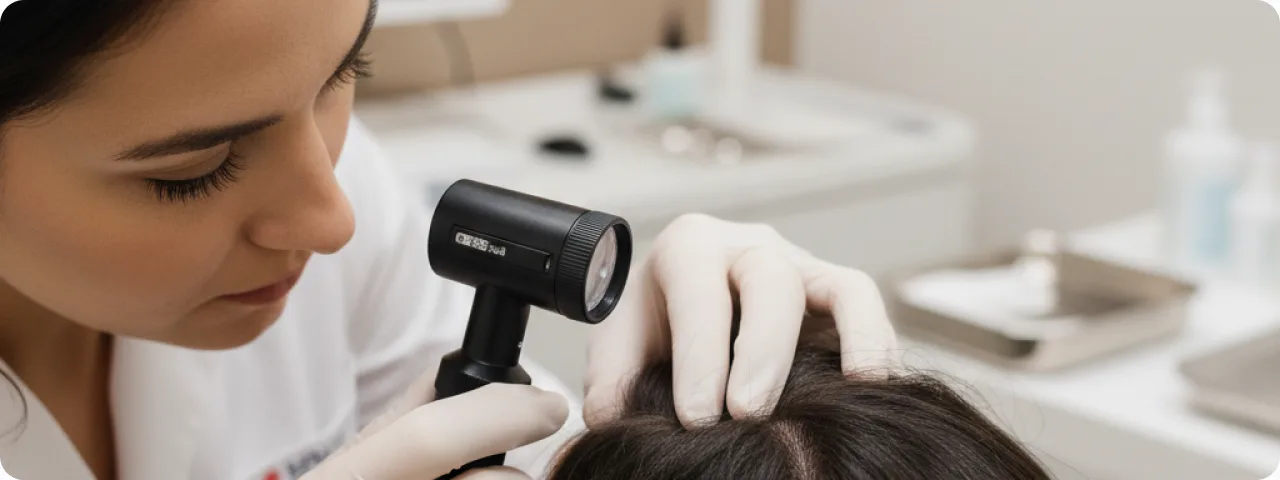
Diagnosis is based on clinical examination and the history. The dermatologist assesses the characteristic features — where the lesions are, the type of scaling and the degree of inflammation. Dermatoscopy allows the structure of the affected skin to be examined in detail. In difficult cases, mycological testing is done to identify Malassezia, along with the differential diagnosis against psoriasis, contact dermatitis and fungal infections. Skin biopsy is rarely required, only where the course is atypical.
Current treatment
Treatment of seborrhoeic dermatitis of the scalp is based on antifungal shampoos with ketoconazole, zinc pyrithione or selenium sulphide. Topical corticosteroids (lotions, solutions) are prescribed in short courses to reduce inflammation. Shampoos with salicylic acid and tar help to clear the scaling. In severe forms, oral antifungals are used (itraconazole, fluconazole). UVB phototherapy and laser therapy are used as adjuncts. It is important to continue maintenance treatment to prevent relapse.
Prevention and care
To prevent flares of seborrhoeic dermatitis it is recommended to wash the hair regularly with gentle shampoos, to use an antifungal shampoo 1–2 times a week preventively, to avoid harsh styling products, to eat a balanced diet with less sugar and fatty food, to manage stress, to support the immune system and to see a dermatologist regularly.
Related reading
Did not find the answer to your question?
Every case is individual. If you have noticed changes in your skin, or have symptoms that concern you, book a consultation.